Centro para la Cultura y las Artes de la Ribera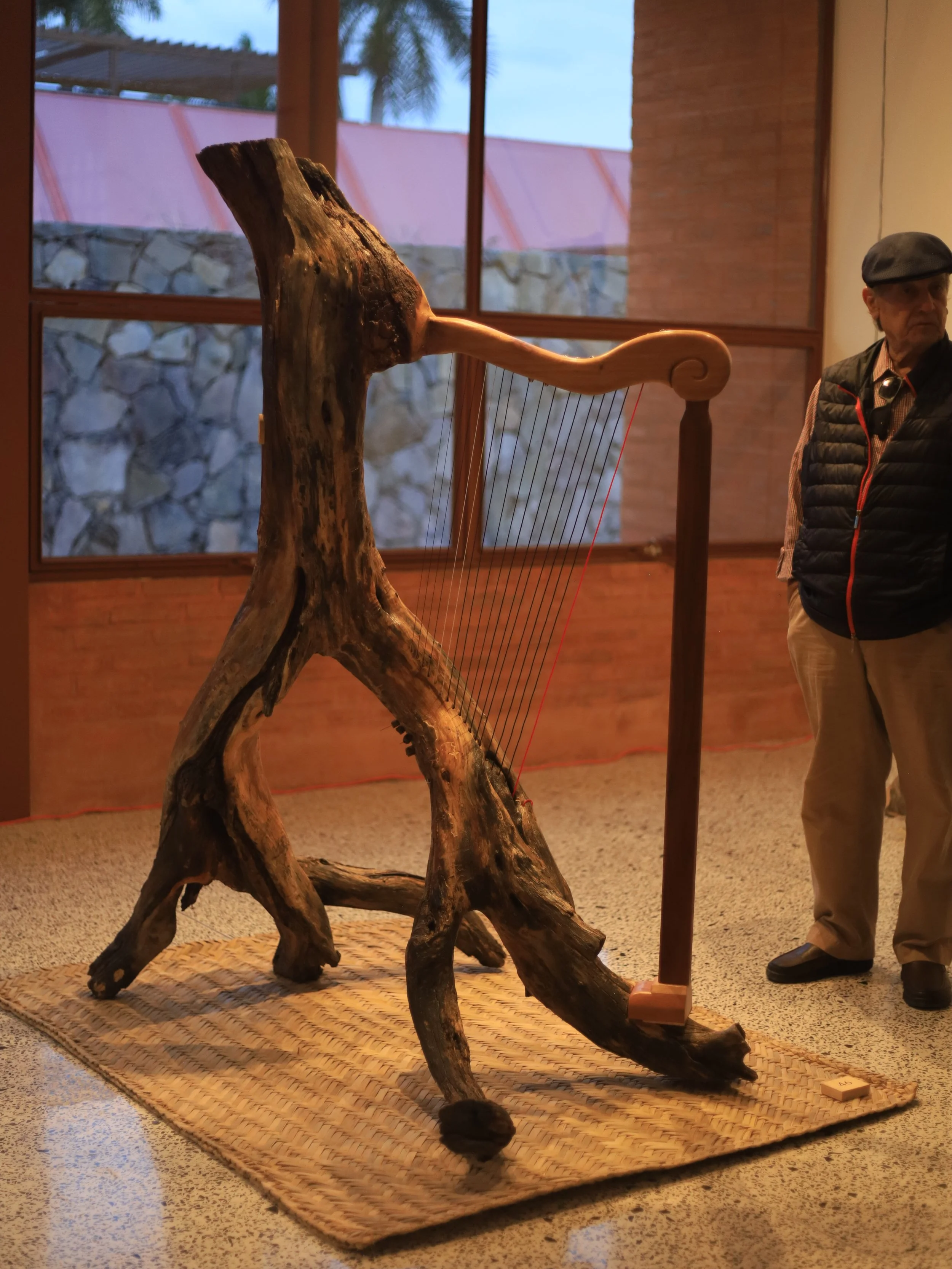
ESSE · Centro para la Cultura y las Artes de la Ribera · Ajijic, Jalisco · 2025
Some woods remain silent for centuries. Mesquite wood, from a tree with deep roots and dense timber, laden with history and the sun of the lake, is one of them. In The Orpheus Harp, ESSE gave it back its voice.
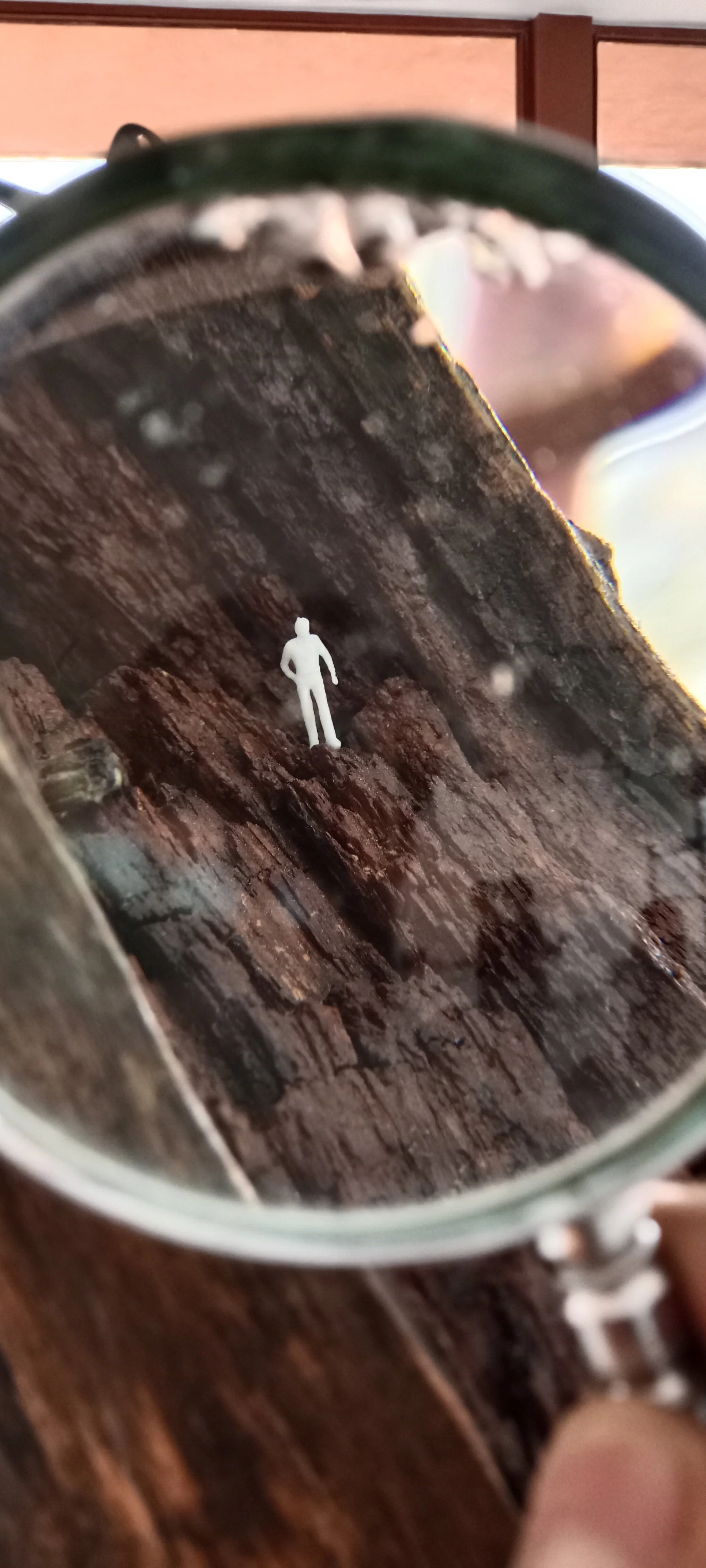
The piece was born from a fragment of mesquite salvaged from the shores of Lake Chapala: wood that had already fulfilled another life, another time, another purpose. In ESSE's hands, it was transformed into a harp—a stringed instrument, an instrument of myth—evoking the figure of Orpheus, the musician of Greek mythology whose lyre had the power to move stones, calm wild beasts, and open the gates of the underworld with the simple act of playing.
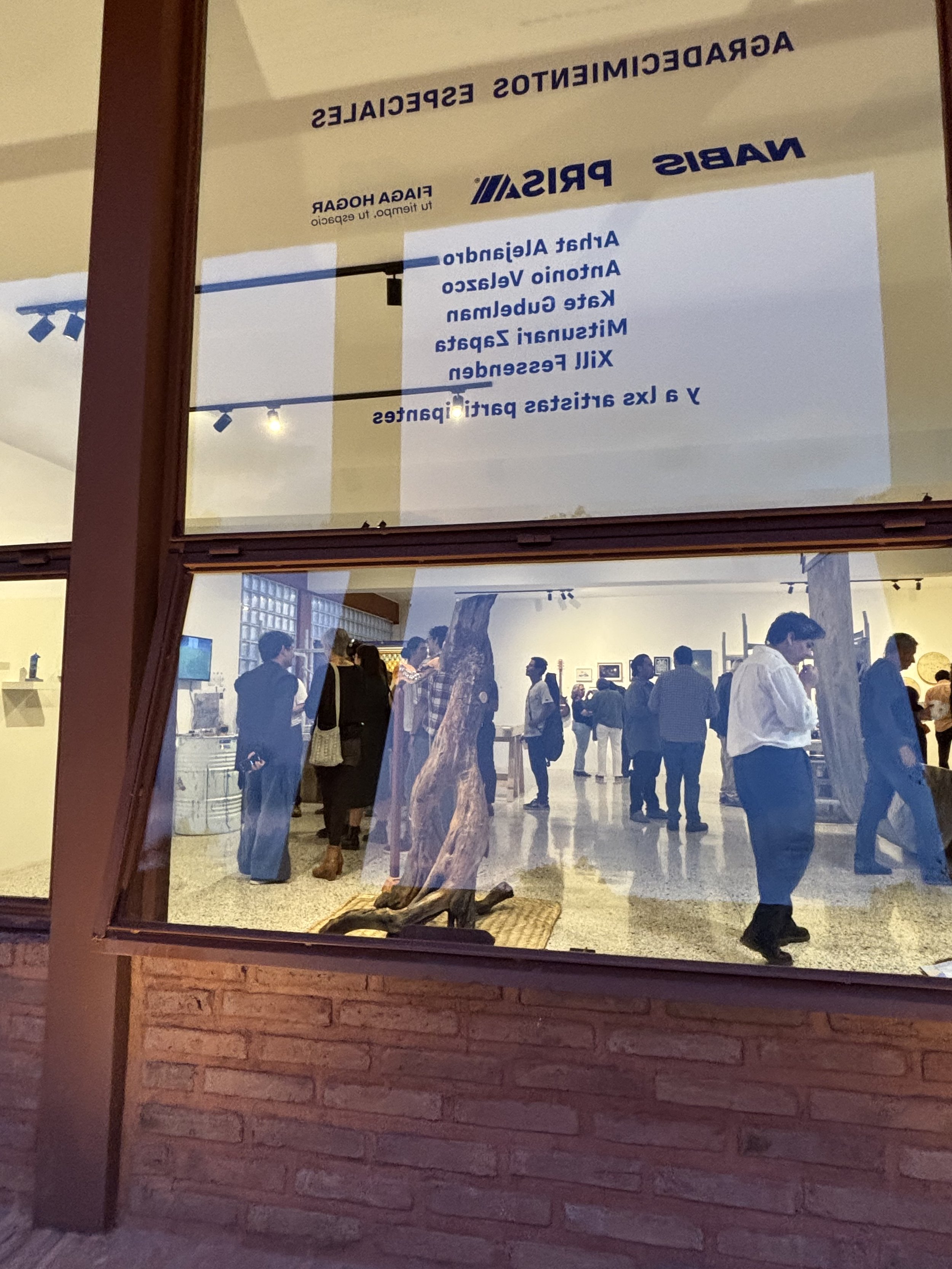
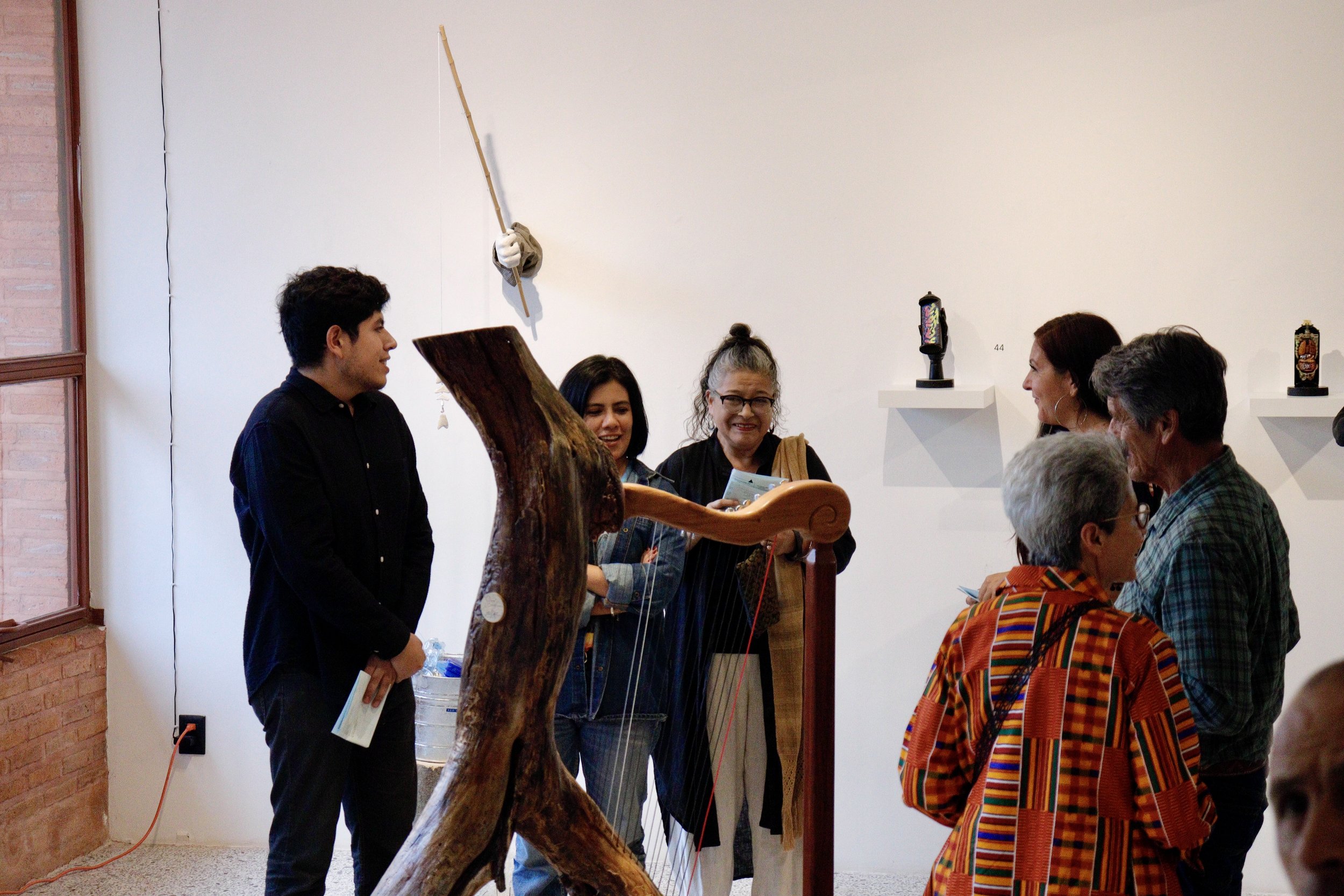
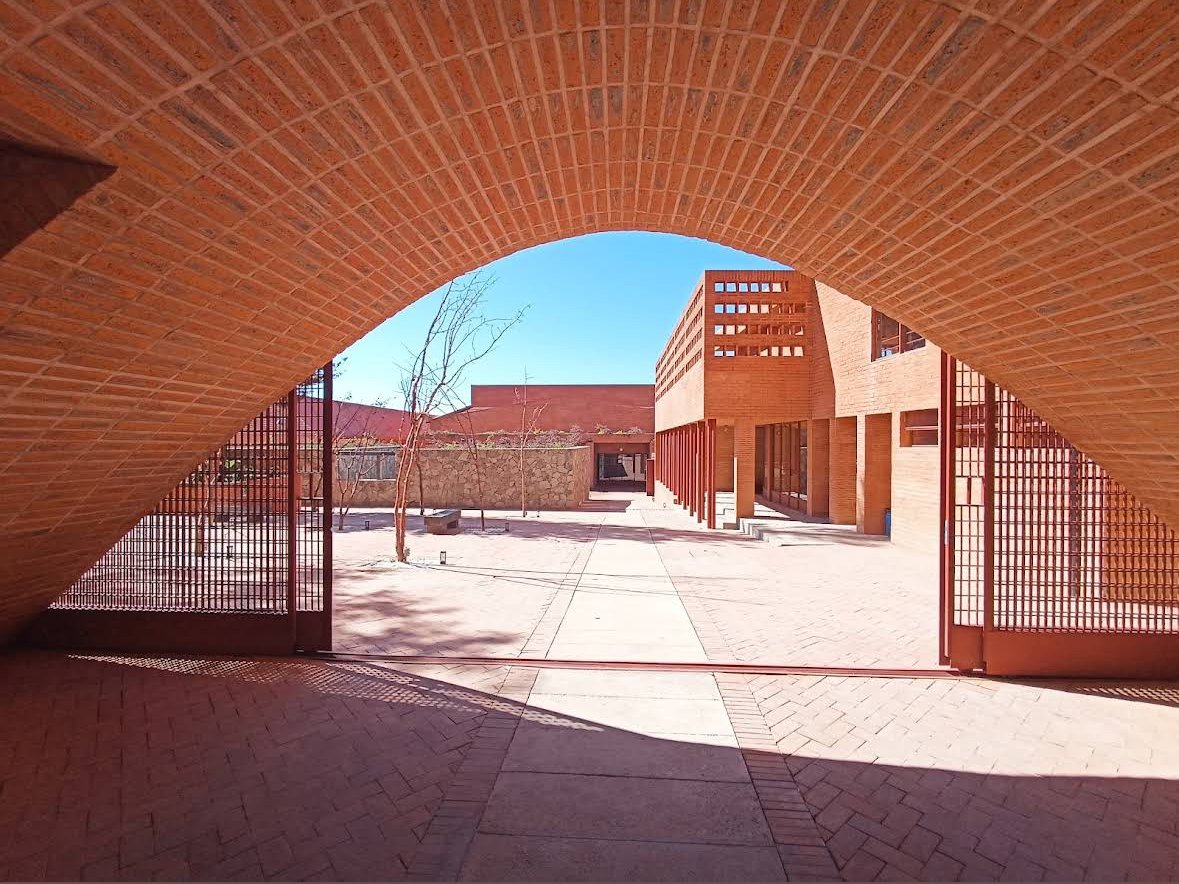
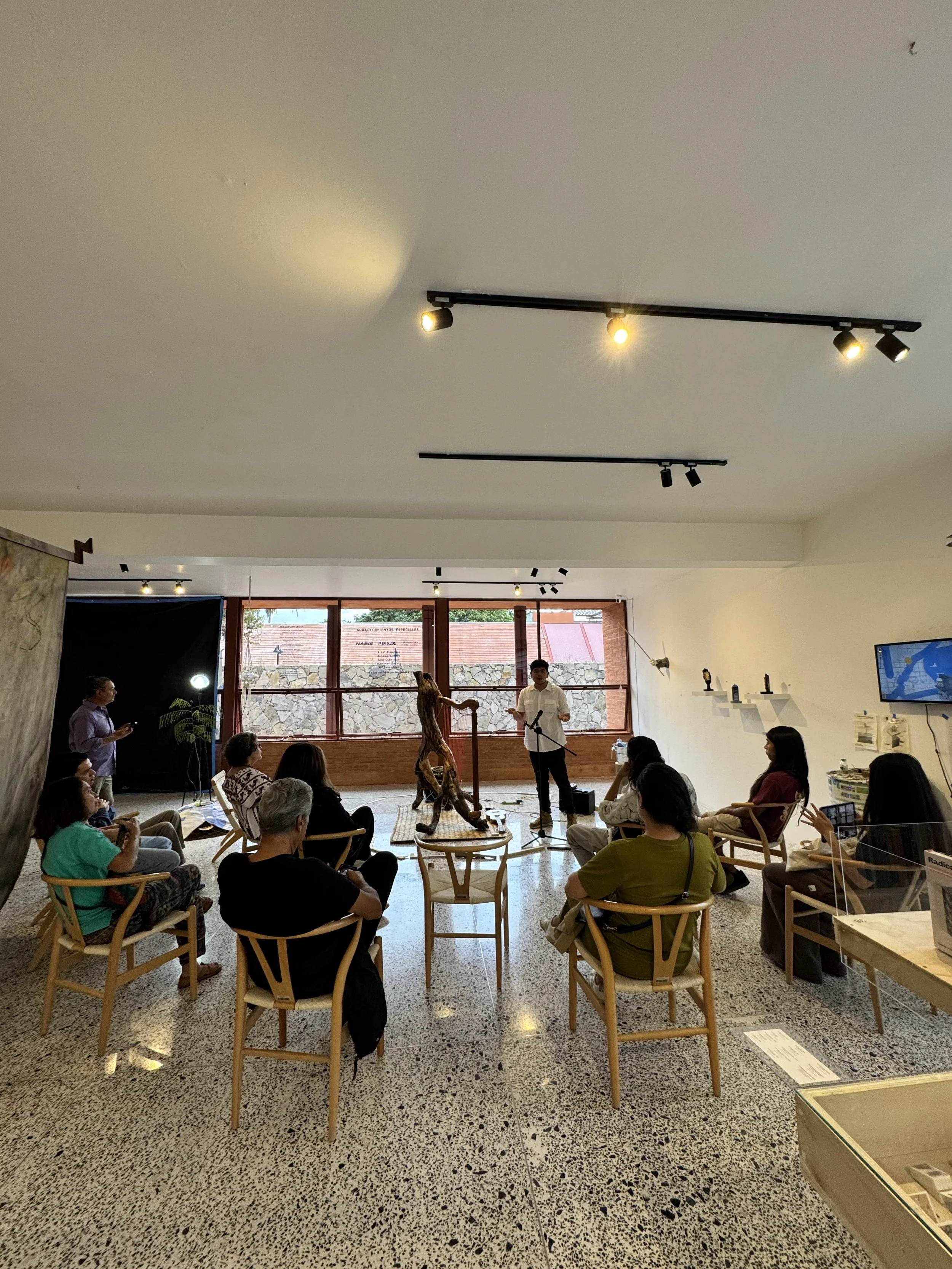
The work was presented as an installation and performance at the Center for Culture and the Arts of the Lakeside, in Ajijic, Chapala, one of the most significant cultural venues in the region, a space that hosts exhibitions, performing arts, and a vibrant dialogue between local and international artists. In this context, The Orpheus Harp was not merely an object to contemplate: it was an instrument that was played. The sound emerged directly from the wood—from the wood that the lake had preserved, that the earth had shaped over decades—thus completing the cycle of the myth: matter reclaiming its song.
The installation proposes a reflection on transformation as an act of creation. Like Orpheus, who crossed impossible thresholds guided only by his music, the rescued mesquite tree crosses its own threshold: it ceases to be waste and becomes an instrument, a voice, a sonic presence in an exhibition space.
The Orpheus Harp is, in essence, the philosophy of ESSE taken to its purest form: finding in what the world discards the material for something new, something that speaks, something that lasts.
ZONA Maco
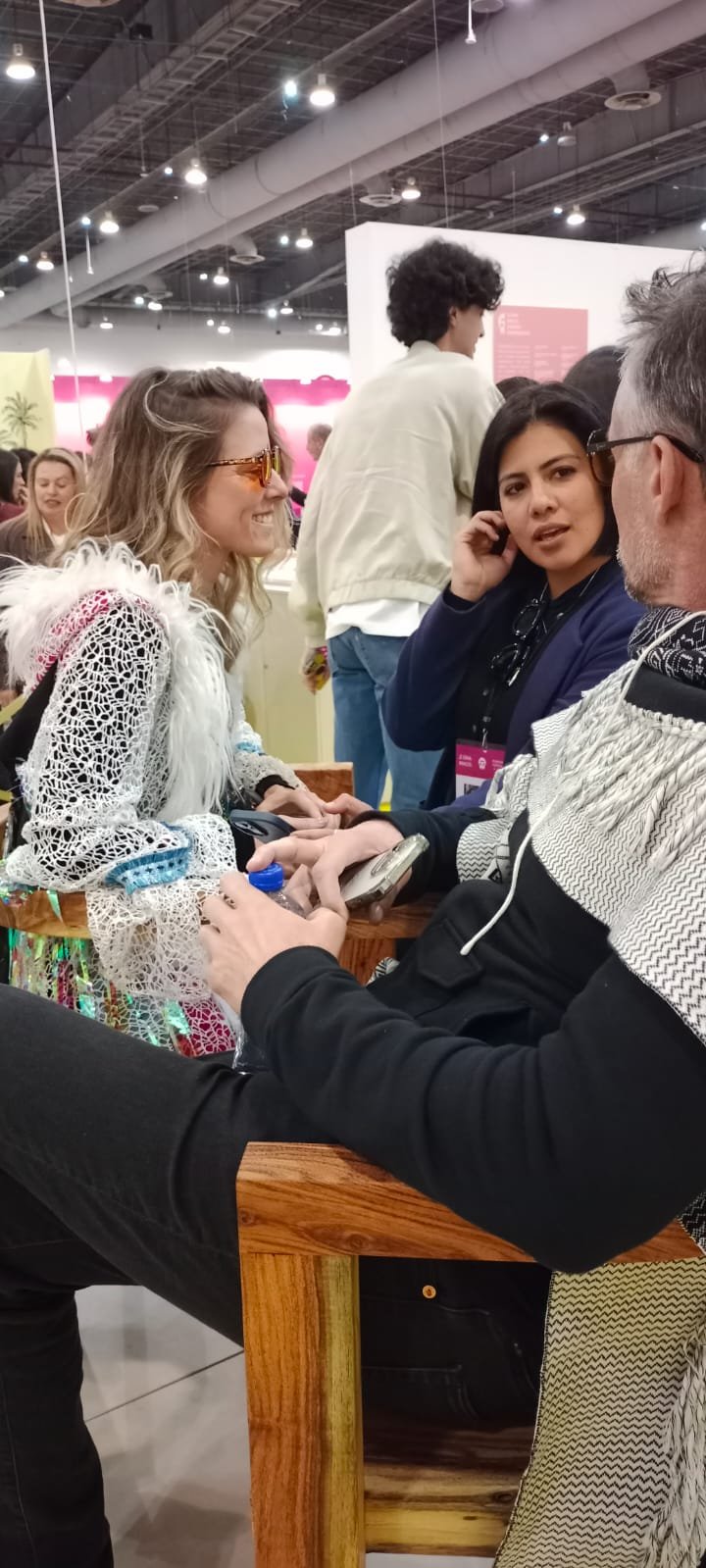
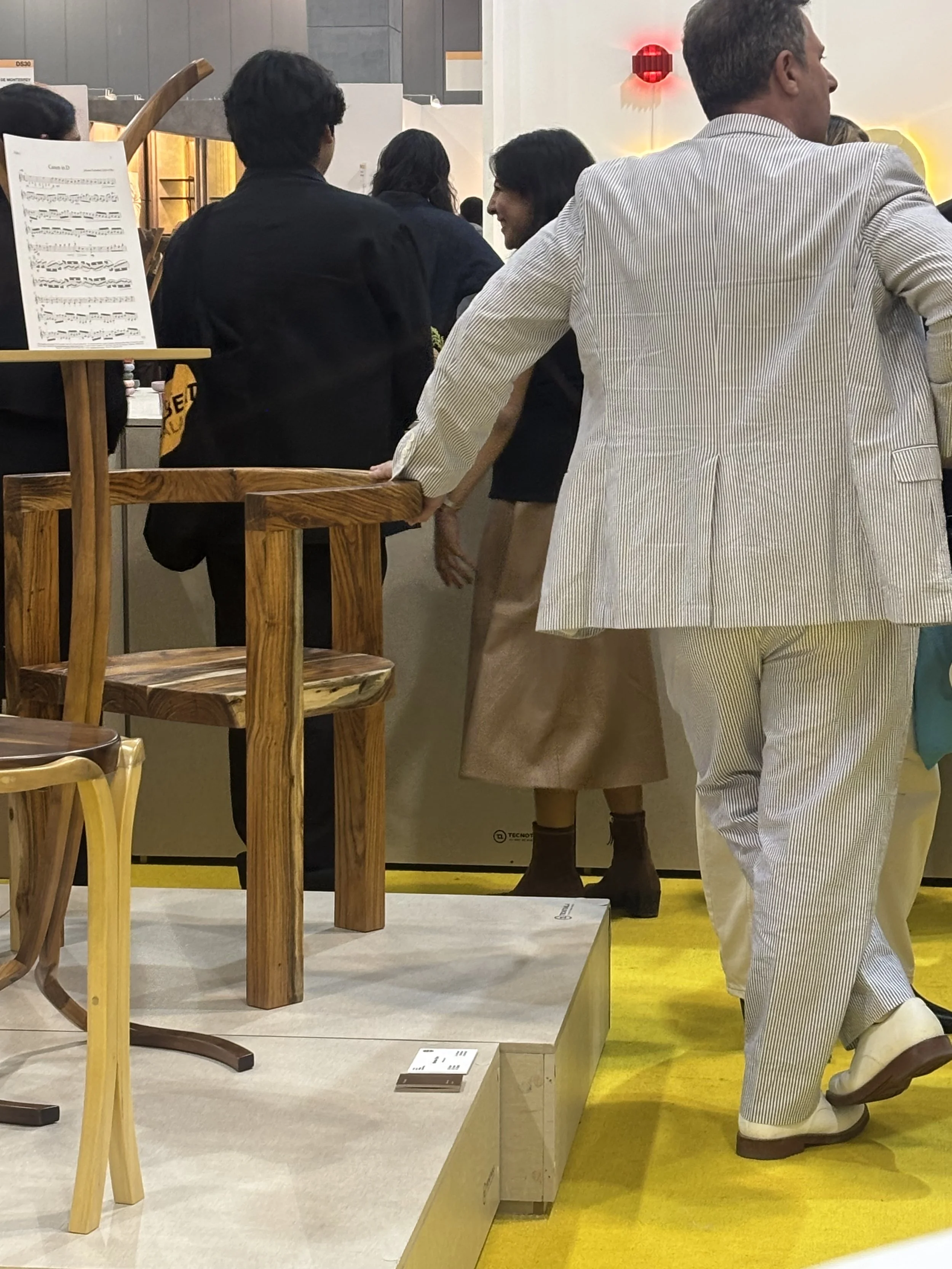
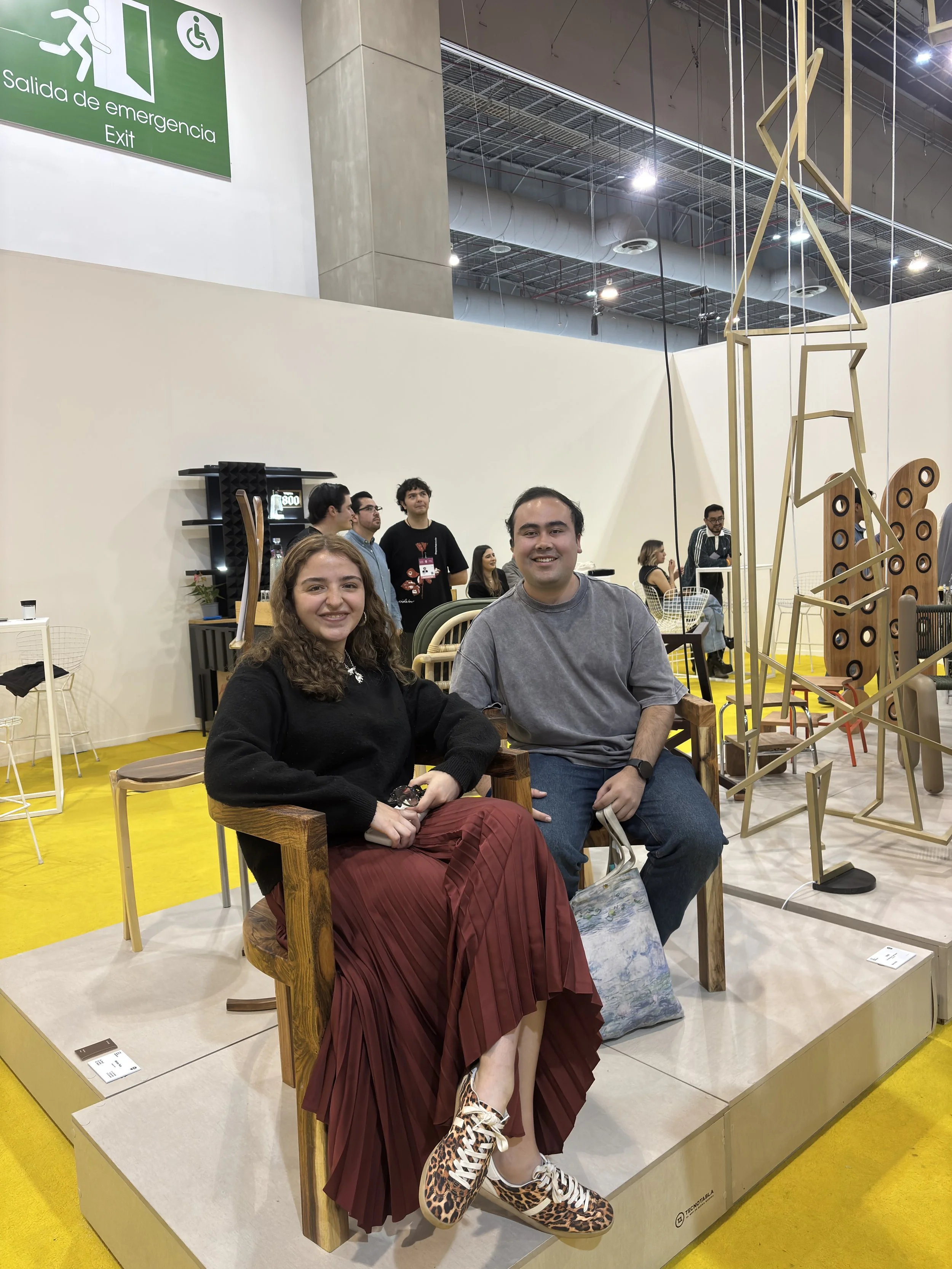
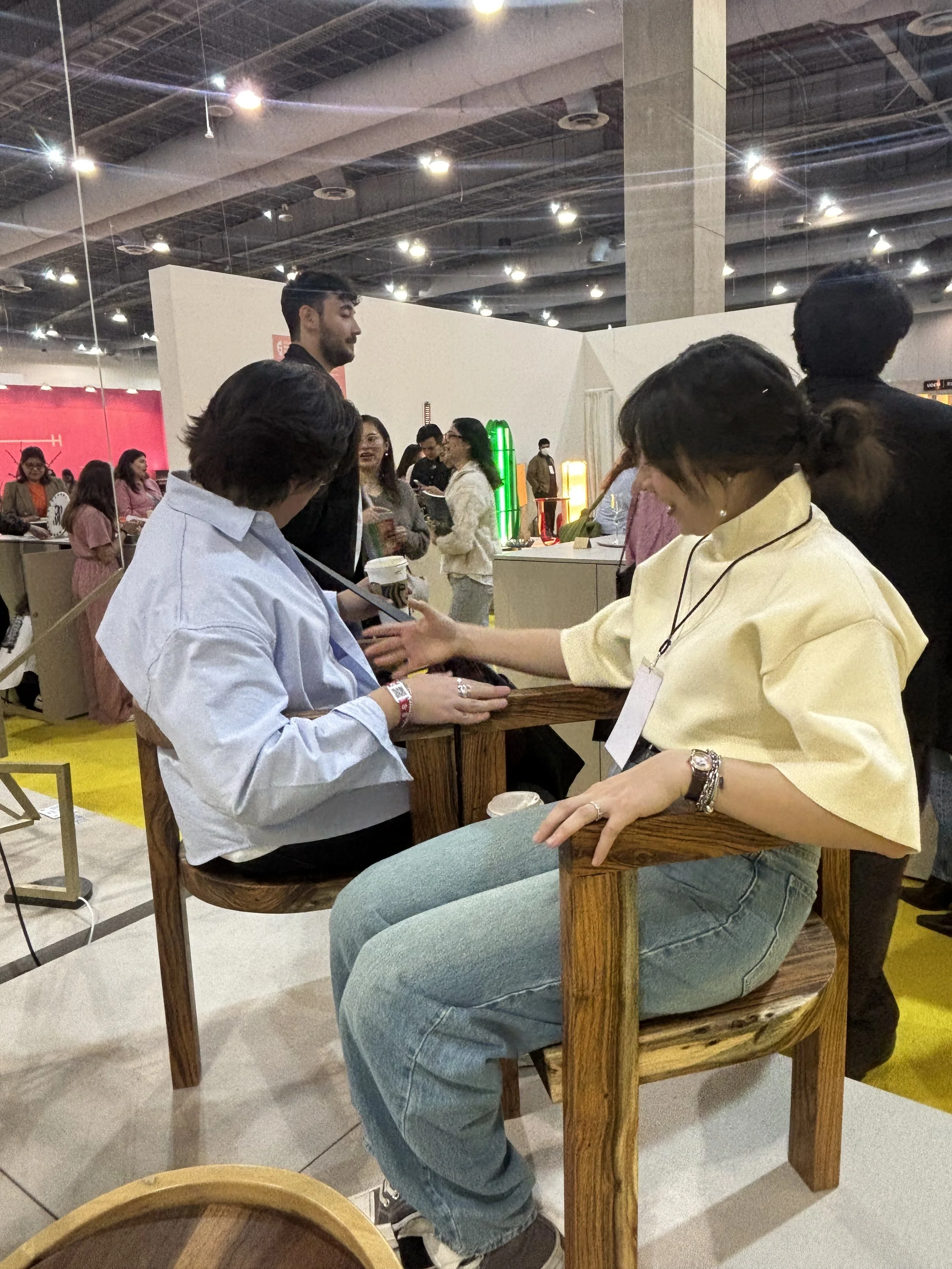
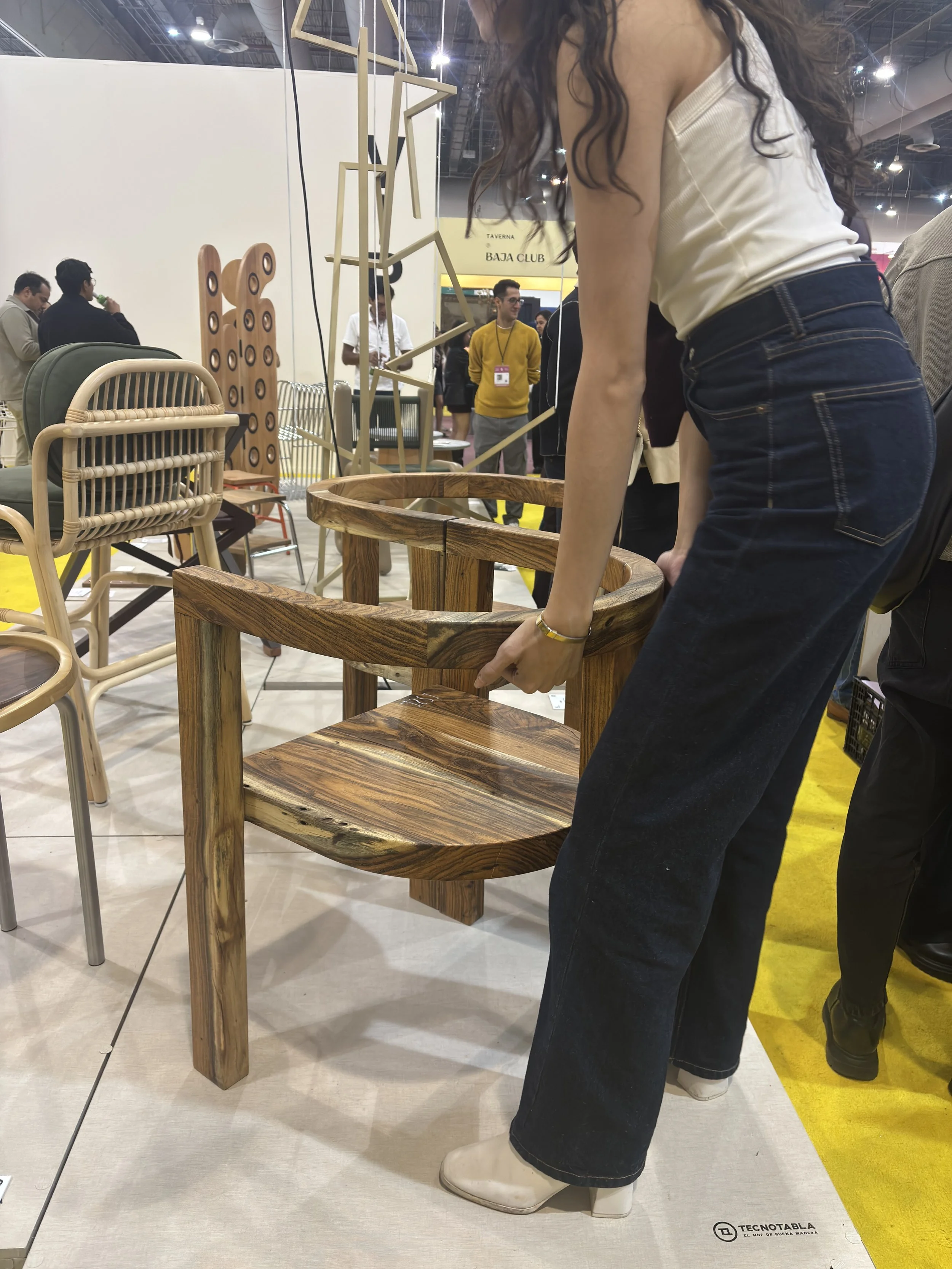
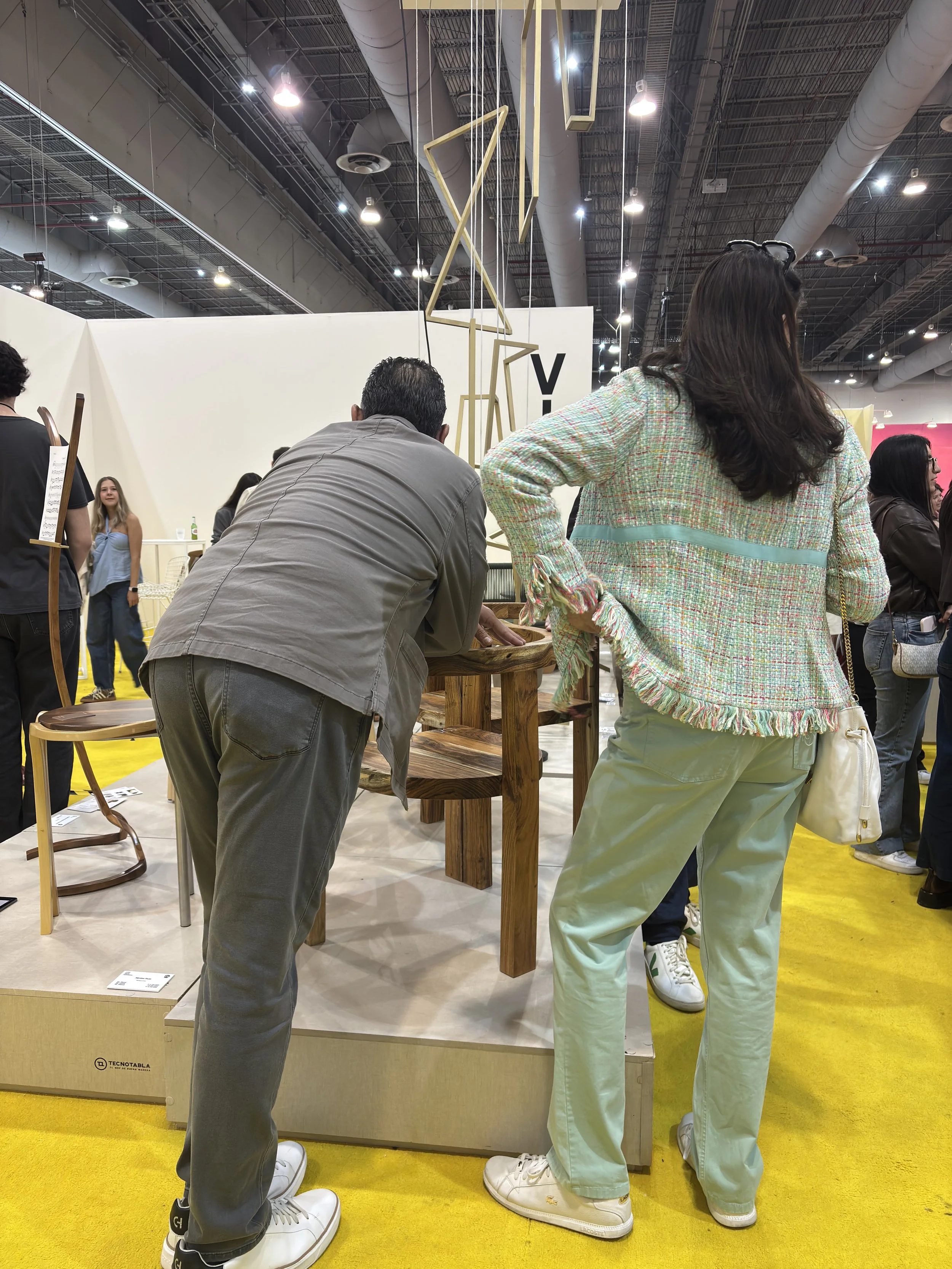
DISEÑO EMERGENTE —
ZONA MaCO 2026
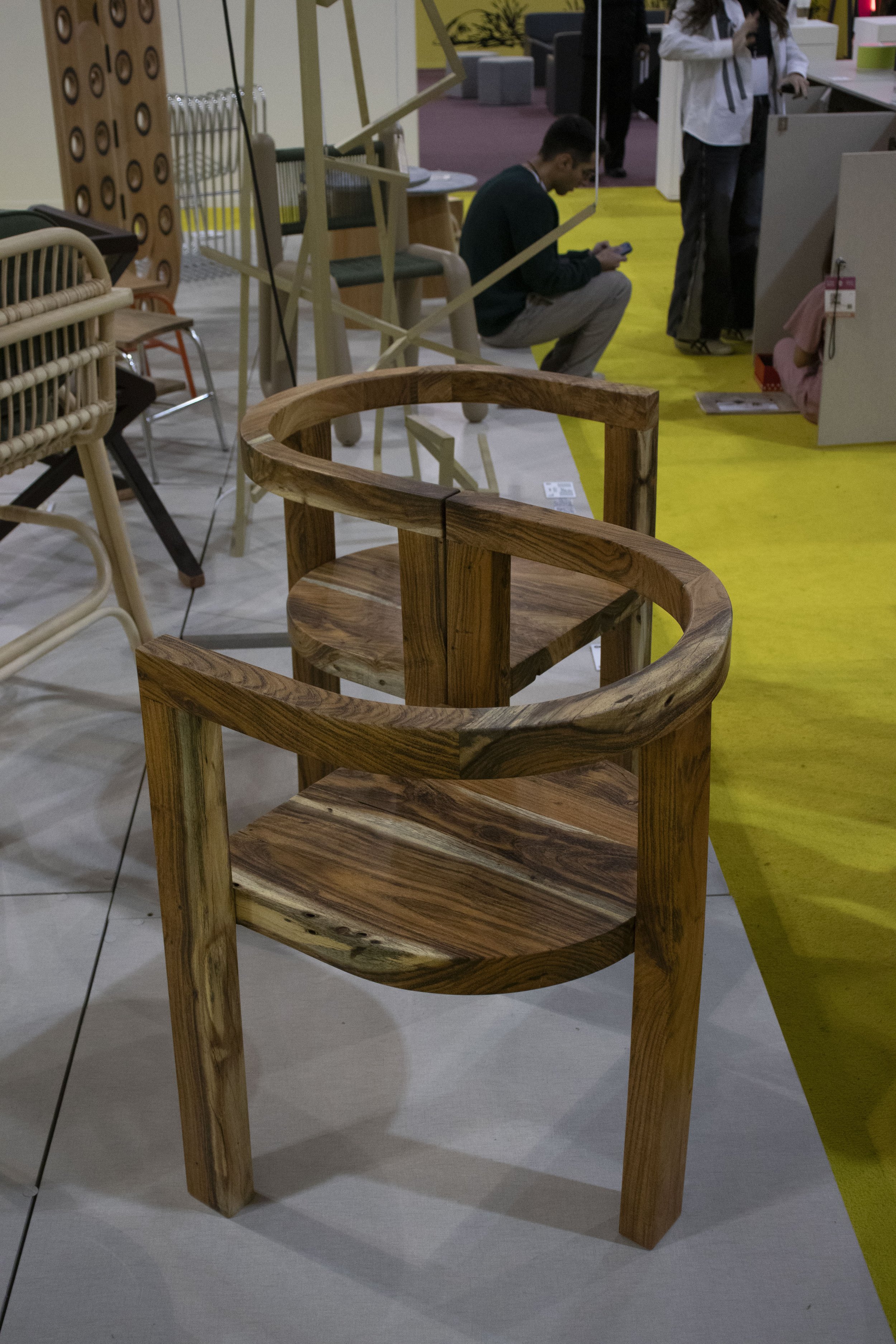
Zona MACO 2026, ESSE presenta su versión en huaje: una exploración material que dialoga con el territorio, la memoria táctil y la forma esencial. La silla ESSE cuyo nombre evoca el fluir continuo de una curva se reinterpreta en esta madera mexicana de carácter expresivo, con veta singular y una presencia cálida que transforma cada pieza en un objeto único.
Su participación en la sección de Diseño Emergente reafirma el compromiso de ESSE con un diseño que emerge desde lo local hacia lo contemporáneo: honesto en sus materiales, riguroso en su geometría, y consciente del ecosistema del que proviene. El huaje no es solo un recurso, es una decisión.